A technique to shape the frame

Three-Point Lighting

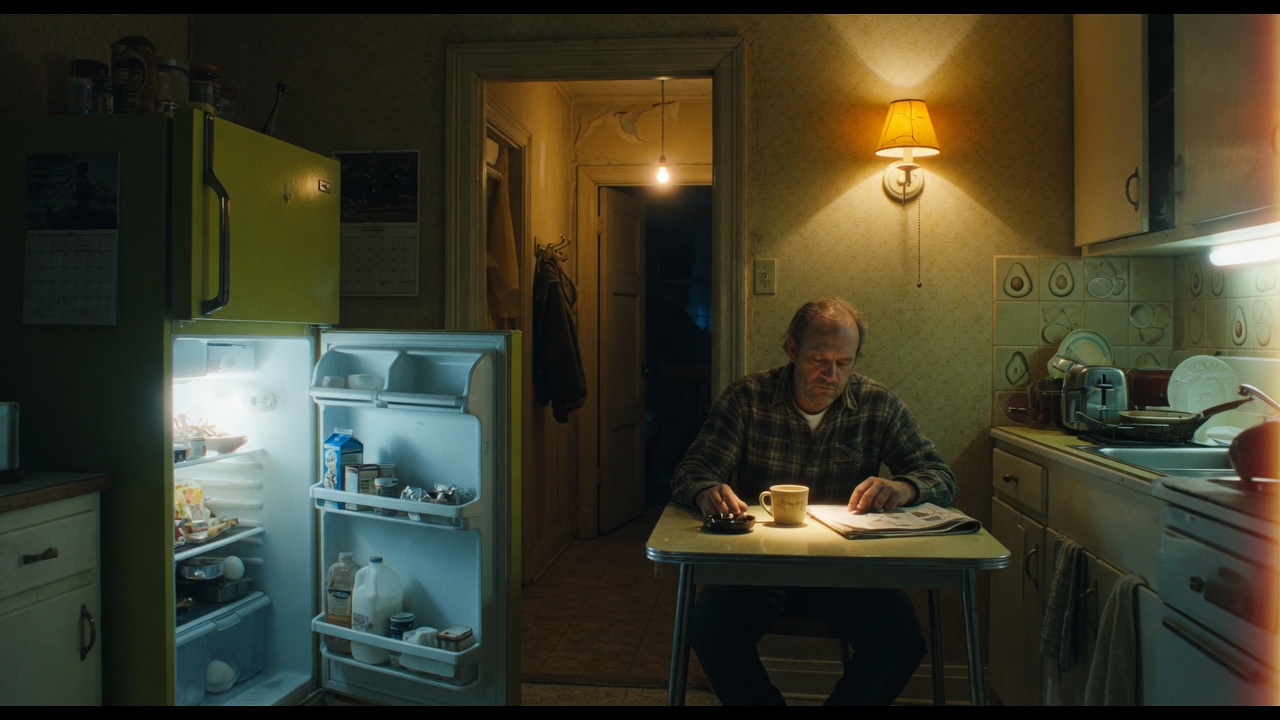
Three-point lighting, the basic three point lighting setup, places a key, a fill, and a backlight so a face is modeled from one dominant side, opened in the shadows, and separated from the background. The key is brightest and sets direction; fill and back exist only as ratios against it.

Study the light direction, shadow shape, and separation. Media illustrates the concept; it does not establish AI model performance.

How it works

In a scene it is the default portrait grammar: the audience can read both eyes, the cheekbones have a light side and a shadow side, and the hair does not melt into the wall. Classical coverage uses it so reverse shots match, and so a close-up still feels like the same room as the master.

It is the wrong tool when the room already has a single honest source, or when the story wants a face half-erased. Teaching the setup is useful.

Leaving it on every night interior as three hidden movie lights is how a crime scene starts to look like a cosmetics ad.

When to use it

Use it for a teachable talking-head or a studio close-up that must stay readable across a whole scene. Do not use it as the only language of a night interior that is supposed to be one lamp.

Further notes

Three-point lighting, the basic three point lighting setup, places a key, a fill, and a backlight so a face is modeled from one dominant side, opened in the shadows, and separated from the background. The key is brightest and sets direction; fill and back exist only as ratios against it.