A technique to shape the frame
Split lighting
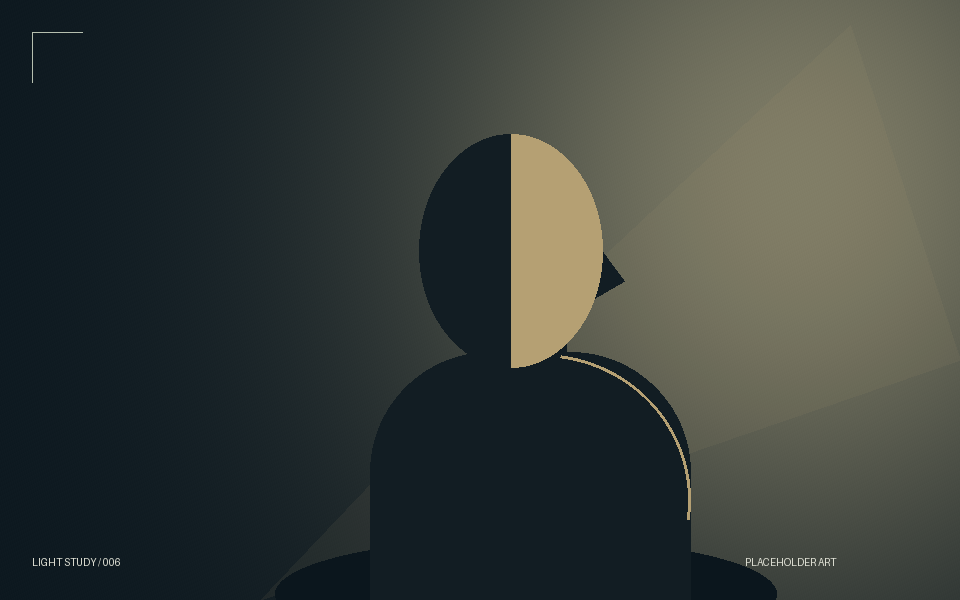
Let a side source divide the face into a lit side and a shadow side for a clear, graphic portrait.
How it works
Move the key source to the side of the subject, near a right angle to the camera's viewing direction. Adjust the face and source until the shadow boundary runs approximately through the center.
The exact division changes with facial shape and pose. Decide whether the shadow eye should remain readable and add only the fill needed for that intention.
When to use it
Character portrait: emphasize a guarded or divided expression.
Graphic visual study: examine how a single directional source changes facial volume.
Common mistakes
If the source moves toward camera, the pattern becomes less divided. A large head turn changes the shadow boundary. Preserve a believable nose shadow rather than painting an arbitrary stripe across the face.
Questions, answered
Must the shadow side be completely black?
No. Some fill can retain eye or skin detail while preserving the dominant division.